

In This Article – Core Desire and Core Fear – Signature Strengths – Common Challenges and Shadow Pattern – Best Career Paths for the Explorer – The Explorer in Relationships
The Explorer archetype seeks freedom, adventure, and authentic self-discovery above nearly everything else. People with this dominant pattern are independent, curious, and driven to push beyond boundaries — often the first to try something new and the last to settle into a fixed routine.
Core Desire and Core Fear
The Explorer’s core desire is to experience freedom and discover an authentic self, often through new experiences and unfamiliar territory rather than introspection alone. The corresponding core fear is being trapped or confined — a fear that shapes nearly every major decision this archetype makes, from career choices to relationship structures. This pairing explains why Explorers often resist conventional paths: predictability itself can feel like a threat to identity, not just an inconvenience.
See also: “What Are the 12 Jungian Archetypes?” — for how the Explorer fits alongside the other 11 archetypes.
Signature Strengths
Explorers bring a distinctive energy: they consistently push beyond existing boundaries, express themselves with genuine authenticity rather than social performance, think independently rather than following the crowd, approach challenges with real courage, and often find innovative solutions precisely because they’re not bound by conventional assumptions about how things should be done.

Common Challenges and Shadow Pattern
The same independence that makes Explorers exciting to be around can also make deep commitment genuinely difficult — this archetype can be restless with routine, avoidant of the vulnerability that close relationships require, and prone to taking unnecessary risks in pursuit of the next new experience. Follow-through on long-term projects can suffer when the initial novelty wears off. Under sustained pressure, the Explorer’s shadow tends to show up as chronic escapism — running from any situation that starts to feel confining, rather than working through it, which can leave a trail of unfinished commitments and unresolved relationships.
See also: “What Is a Shadow Archetype (and Why Yours Matters More Than Your Main One)” — for more on how this pattern specifically develops.
Explorer Archetype at a Glance
| Category | Details |
| Core Desire | Freedom and authentic self-discovery |
| Core Fear | Being trapped or confined |
| Top Strengths | Independent, adventurous, authentic, curious, pioneering |
| Common Challenges | Restless, non-committal, isolated, risk-taking |
| Shadow Pattern | Escapism — chronic avoidance of anything that feels confining |
Best Career Paths for the Explorer
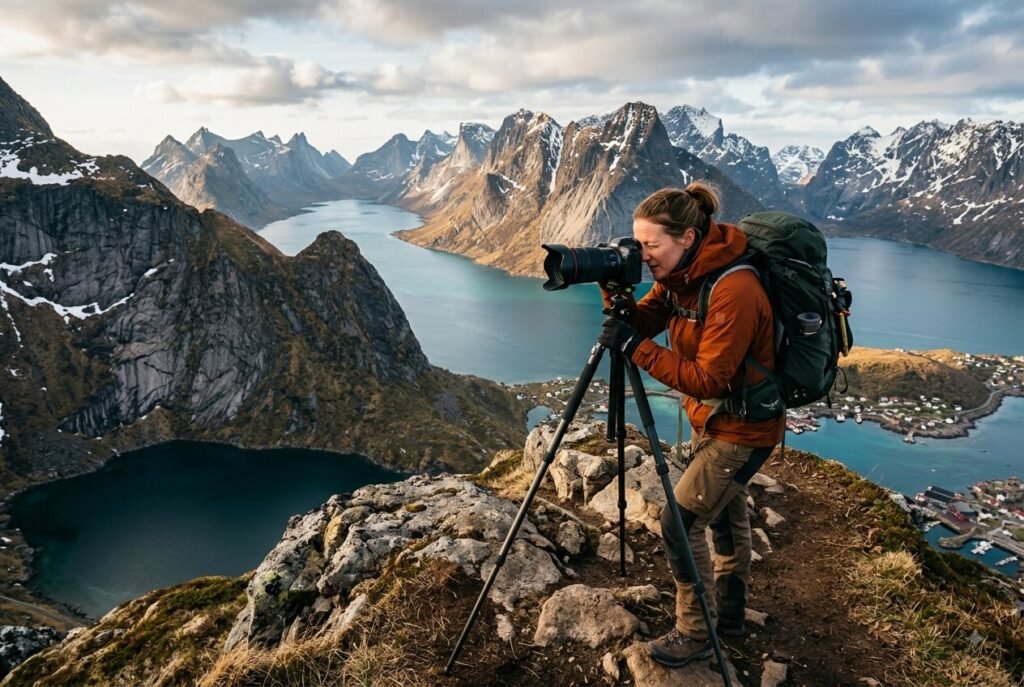
Explorers thrive in roles that reward independence and novelty over routine. Strong fits include travel and exploration (travel writing, expedition leadership, cultural research), innovation and entrepreneurship (startup founding, innovation consulting, venture capital), creative fields with flexible structure (freelance art, photography, documentary filmmaking), and outdoor and adventure work (guiding, outdoor education, field research). The common thread is autonomy — roles where the Explorer sets their own path rather than following someone else’s fixed structure.
The Explorer in Relationships
Explorers bring genuine excitement and authenticity into their relationships, but they need partners who respect their independence rather than trying to hold them close too tightly. This archetype pairs especially well with the Outlaw (a shared rebellion against limitations and boundaries), and reasonably well with the Magician (who provides transformation while the Explorer offers discovery) and the Creator (who innovates while the Explorer discovers).
For anyone building a relationship with an Explorer, actively supporting their need for independence matters more than almost anything else. Sharing in their adventures when genuinely possible, respecting their authentic self-expression even when it’s unconventional, avoiding any attempt to confine or box them in, and encouraging their discoveries rather than treating them as distractions all tend to strengthen the connection significantly.
What Drives the Explorer’s Core Motivations
The Explorer’s motivations center on several consistent needs: independence and self-sufficiency, authenticity in self-expression, adventure and novelty, personal growth through new experience, and freedom from any structure that feels imposed rather than chosen. These aren’t restlessness for its own sake — they reflect a real psychological need to keep discovering who they actually are through direct experience, rather than accepting an identity handed to them by family, culture, or convention.
The fears that accompany these motivations are worth naming directly: getting trapped in a conventional or predictable life, inner emptiness that no amount of travel or novelty can fill, conformity to expectations that don’t fit, and — less obviously — the possibility that all this searching never actually leads anywhere.
Recognizing an Explorer in Everyday Life
Explorers are often the person in a group who’s already planning the next trip before the current one has ended, who changes careers or cities more often than most people find comfortable, and who genuinely can’t explain why a stable, objectively good situation still feels confining.
This isn’t flightiness for its own sake — it’s a coherent drive toward authentic self-discovery, and it produces real value in the right contexts: teams need someone willing to try the untested approach, communities benefit from someone who brings back new perspectives from outside, and relationships can be genuinely enriched by a partner who keeps growing and changing rather than settling into stagnant routine. The challenge is knowing when the pursuit of “more” is genuine growth versus running from something that actually needs to be faced directly instead of escaped.
Growth Path for the Explorer
The most useful growth work for a dominant Explorer isn’t abandoning the drive for freedom — that core trait is genuinely valuable. The more productive path is learning to distinguish genuine growth from avoidance: noticing when the urge to leave a job, relationship, or city is pointing toward something real versus functioning as an escape hatch from discomfort that would resolve with patience instead.
This often means practicing staying present through difficulty rather than automatically moving on, and learning that some forms of freedom — emotional security, a stable sense of self — can only be built through sustained commitment, not found through the next new experience. Explorers who do this work tend to keep their genuine independence while building a life with more lasting depth underneath the constant motion.
How the Explorer Archetype Shows Up in Myth and Legend
The Explorer’s pattern recurs throughout mythology and folklore in figures defined by a restless refusal to stay put. The wandering hero who leaves a settled home to seek something unnamed and unknown appears across countless storytelling traditions, from epic voyage narratives found in ancient Mediterranean literature to the wandering-pilgrim figures common in medieval folklore across cultures.
What distinguishes this figure from the Hero archetype’s more goal-directed quest narrative is the Explorer’s relative lack of a fixed destination — the journey itself, and what it reveals about the traveler, matters more than any specific endpoint reached. This narrative pattern reflects something genuinely accurate about how dominant Explorers describe their own life trajectory: less a series of planned steps toward a fixed goal, more a continuous unfolding where each new experience reveals the next direction worth pursuing.
What the Explorer Archetype Looks Like in Daily Decision-Making
Beyond broad personality traits, the Explorer’s core pattern shows up in specific, recognizable decision-making habits. When facing a choice between a stable, predictable option and a less certain but more novel one, an Explorer tends to lean toward novelty even when the stable option is objectively reasonable, since predictability itself carries a cost this archetype feels more acutely than most.
When a routine starts to feel comfortable, an Explorer often experiences that comfort as an early warning sign rather than a reassurance, prompting a search for the next change before boredom or confinement fully sets in. When evaluating a major life decision, an Explorer weighs “will this keep me free to grow and change” nearly as heavily as more conventional factors like financial stability or social approval — a genuinely different calculus than most other archetypes apply, and one worth naming explicitly when an Explorer is trying to explain a choice that looks impulsive to people using a different set of priorities.
Maslow’s concept of self-actualization overlaps closely with what drives the Explorer archetype, and is worth reading directly.
Frequently Asked Questions
What is the Explorer archetype’s biggest weakness? A tendency toward escapism under stress — avoiding any situation that starts to feel confining rather than working through the discomfort, which can undermine long-term commitments.
What careers suit the Explorer archetype best? Travel and exploration, entrepreneurship and innovation, flexible creative work, and outdoor or adventure-based careers all align well with the Explorer’s need for independence and novelty.
Which archetypes pair best with the Explorer? The Outlaw tends to be the strongest match, sharing a mutual rebellion against limitations, while the Magician and Creator also pair reasonably well.
Can an Explorer archetype settle into a stable relationship? Yes, though it typically requires a partner who explicitly respects independence rather than expecting constant closeness — Explorers can absolutely commit deeply, just not in a way that feels confining.
Where to Start
The Personality Archetype Test is a free 60-question assessment that identifies whether the Explorer — or one of the other 11 archetypes — is your dominant pattern. Take the free assessment to find out.